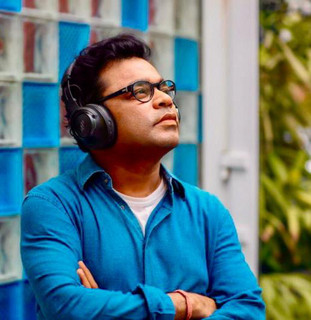
A.R. Rahman
A. R. Rahman Biography – The Mozart of Madras
Few names in the world of music command as much respect and admiration as A. R. Rahman. Known as the “Mozart of Madras,” Rahman is not just a composer but a cultural icon whose melodies transcend borders, languages, and generations. His journey from a young boy in Chennai to an Oscar and Grammy-winning composer is as inspiring as it is extraordinary.
Early Life and Struggles
A. R. Rahman was born as A. S. Dileep Kumar on January 6, 1967, in Chennai, Tamil Nadu. His father, R. K. Shekhar, was a music composer and conductor for Malayalam films. Rahman’s early childhood was filled with the sounds of instruments and recordings in his father’s studio.
But life turned upside down when Rahman was only nine years old—his father passed away unexpectedly. The loss left the family in financial hardship. To support his mother and siblings, young Dileep began working as a keyboard player for local orchestras and bands. This was his first brush with professional music, and though it came out of necessity, it soon became his life’s calling.
Education and Musical Training
Rahman’s prodigious talent was evident from a young age. He started learning piano at four and later trained under renowned musicians like Master Dhanraj. His versatility made him a sought-after keyboardist, and he often played for music legend Ilaiyaraaja.
Keen to master music formally, Rahman pursued Western classical music at Trinity College of Music, Oxford, and graduated with a degree in composition. This fusion of Indian roots with Western discipline would later become his unique musical identity.
Spiritual Transformation
In 1989, Rahman’s life took a profound spiritual turn. Influenced by Sufism and the teachings of Karimullah Shah Qadri, he converted from Hinduism to Islam and changed his name to Allah Rakha Rahman. He often speaks about how this spiritual journey gave him peace, discipline, and a greater sense of purpose in life.
The Breakthrough with Roja
Rahman’s real breakthrough came in 1992 when filmmaker Mani Ratnam offered him the chance to compose for the Tamil film Roja. The soundtrack was revolutionary—it combined haunting melodies with modern sound technology, something rarely heard in Indian cinema at the time.
The album was a national sensation and earned Rahman the National Film Award for Best Music Direction. Internationally, Roja was included in TIME magazine’s “10 Best Soundtracks of All Time.” From then on, there was no looking back.
Rise in Indian Cinema
Following Roja, Rahman became the most sought-after composer in Indian cinema. His Tamil hits like Bombay (1995), Dil Se (1998), and Alaipayuthey (2000) redefined film music in South India.
Bollywood soon embraced him with open arms. His first Hindi project was Rangeela (1995), directed by Ram Gopal Varma. It was followed by Taal, Dil Se, Guru, Rang De Basanti, Jodhaa Akbar, and Rockstar—all of which remain iconic to this day.
His ability to blend soulful Indian ragas with Western orchestration and electronic beats made him a revolutionary force in the Indian music industry.
International Fame and Slumdog Millionaire
Rahman’s fame was no longer limited to India. He collaborated with international artists such as Andrew Lloyd Webber on the West End musical Bombay Dreams (2002) and worked on global projects like The Lord of the Rings musical.
But it was Slumdog Millionaire (2008) that catapulted him to worldwide stardom. Directed by Danny Boyle, the film’s soundtrack—particularly the song “Jai Ho”—won Rahman two Academy Awards, a Golden Globe, and two Grammys. Suddenly, the boy from Chennai had become a global icon.
Collaborations and Experiments
Rahman has never been afraid to experiment. He has worked with international legends like Michael Jackson, Mick Jagger, Dido, Hans Zimmer, and Nusrat Fateh Ali Khan. His band, the SuperHeavy (with Mick Jagger and Joss Stone), was another example of his global outlook.
At home, he has supported new talent and often gives young singers their first break. His compositions for films like Rockstar, Tamasha, Dil Bechara, and Highway show his continued relevance even decades after his debut.
Awards and Achievements
Rahman’s list of awards is staggering:
2 Academy Awards (Oscars) – Best Original Score & Best Original Song (Slumdog Millionaire, 2009)
2 Grammy Awards
1 Golden Globe Award
1 BAFTA Award
6 National Film Awards (India)
30+ Filmfare Awards (Tamil & Hindi)
Padma Bhushan (2010) – India’s third-highest civilian honor
Beyond awards, his legacy lies in the emotional connection his music creates.
Personal Life
Rahman is married to Saira Banu (not to be confused with the actress of the same name). The couple has three children: Khatija, Rahima, and Ameen Rahman—all musically inclined.
Despite global fame, Rahman lives a modest and spiritual life in Chennai. He founded the KM Music Conservatory, a music school that trains young talents in both Indian and Western music traditions.
Musical Style and Legacy
What makes Rahman truly special is his fusion of genres. He seamlessly blends Indian classical, Sufi music, Qawwali, Western orchestration, electronic beats, and folk traditions. His music often carries a spiritual depth, making it timeless.
Nicknamed the “Mozart of Madras,” Rahman has sold over 150 million records worldwide. His impact on Indian music is immeasurable—he modernized it while staying true to its soul.
Conclusion
From a boy who struggled after his father’s death to a global music legend, A. R. Rahman’s story is one of resilience, talent, and faith. His melodies continue to inspire millions, reminding us that music is not bound by language or geography.
Rahman once said, “Music is all about transporting people; speaking a language which languages fail to express.”
And indeed, his music has become the universal language of emotion, faith, and hope.
Tere Ishk Mein
- 2025-11-12T00:00:00.000000Z
Ambient Music
- 2025-05-28T00:00:00.000000Z
Similar Artists